
Protection and Education
Alpha-Gal Syndrome
KEY POINTS
- Alpha-gal syndrome (AGS) is a serious, potentially life-threatening allergy to alpha-gal that can develop after a tick bite.
- Alpha-gal is a molecule found in most mammals, such as cows and pigs, but not in people.
- People with AGS can have an allergic reaction after eating red meat or being exposed to products containing alpha-gal. Most reactions are delayed 2-8 hours after exposure.
- The best way to protect yourself and your family from AGS is to prevent tick bites.
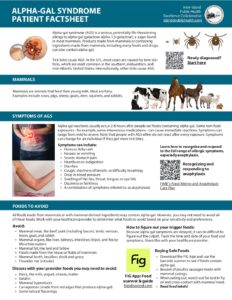
Alpha-gal syndrome patient factsheet
Adapted from AlphaGalInformation.org for Inter-Island Public Health Excellence Collaborative
Alpha-Gal Syndrome 101
What is alpha-gal syndrome (AGS)?
Alpha-gal syndrome (AGS) is a serious, potentially life-threatening allergy and tickborne disease. Alpha-gal is a molecule (galactose-α-1,3-galactose) that is naturally produced in the bodies of most mammals but not in people. It is also found in the saliva (spit) of some ticks. Alpha-gal syndrome is not an infectious disease. There is no bacteria, virus, or parasite.
When a tick bites, it can transfer alpha-gal from its saliva into a person's blood. The body's natural defenses, or immune system, can identify alpha-gal as a threat and trigger an allergic reaction. It can take weeks to months for the immune system to decide to create an allergic response after the initial tick bite. For many, their immune system does not identify alpha-gal as a threat and never mounts an allergic response. Science does not fully understand why some people develop alpha-gal syndrome and others do not.
Once allergic, people may experience symptoms after they eat red meat or are exposed to other products made from mammals. Because of this, AGS is also known as red meat allergy or tick bite meat allergy. Like all allergies, symptoms can range from mild discomfort to life-threatening anaphylaxis. Different people have different levels of reactions.
Characteristic to AGS are delayed allergic responses--usually 2 to 8 hours after consuming mammal products. This is different than other food allegies which usually develop within minutes to two hours.
The delayed symptoms make AGS difficult for patients and healthcare providers to associate symptoms to the foods consumed. Referring to AGS as the “Midnight Allergy” may help people identify AGS. Many people eat their largest portion of mammalian product (e.g. a steak, pork chop, bowl of ice cream) at dinner. With the delayed reaction time of AGS, they then might wake up in the middle of the night with new, unexpected symptoms.
"The Double Delay," visualized
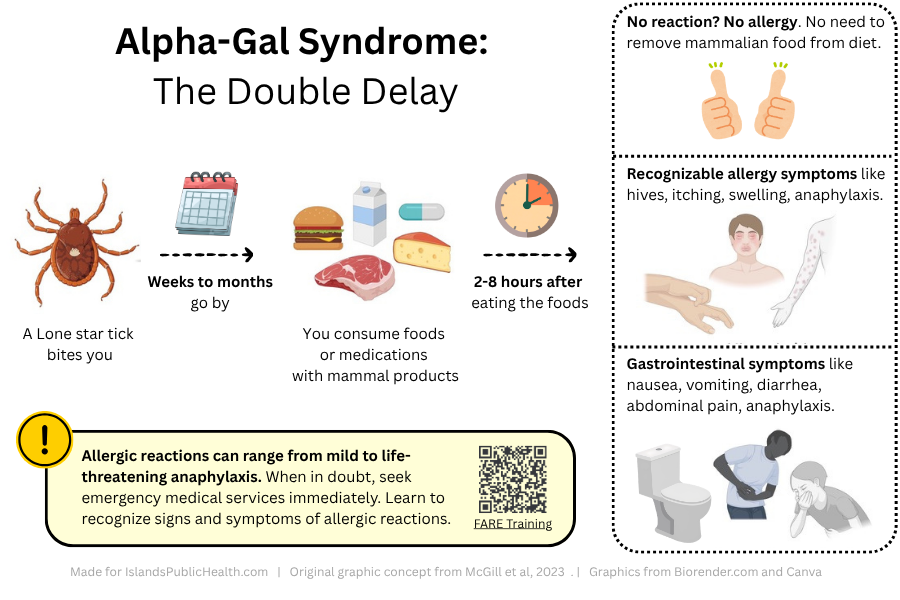
Direct Links in the "Alpha-Gal Syndrome: Double Delay" Graphic:
- Training on how to recognize an allergic reaction and anaphylaxis from FARE [CLICK HERE]
- Original graphic concept from McGill et al, 2023 [CLICK HERE]
"The Double Avoidance," visualized
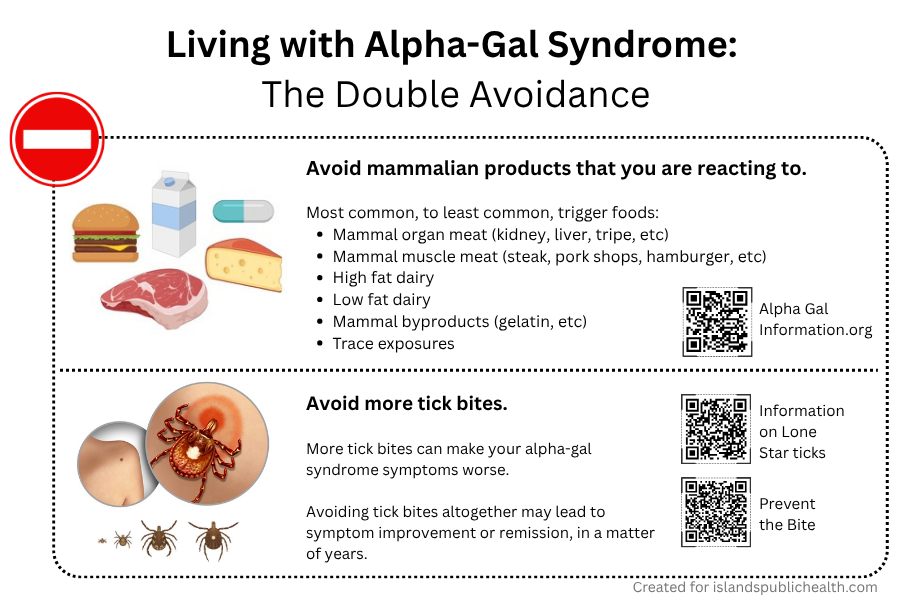
Direct Links in the "Living with Alpha-Gal Syndrome: Double Avoidance" Graphic:
- Foods containing alpha-gal from AlphaGalInformation.org [CLICK HERE]
- Lone star tick information from University of Rhode Island's TickEncounter [CLICK HERE]
- Tips to prevent tick bites from the Martha's Vineyard Tick Program [CLICK HERE]
I was bitten by a lone star tick. What do I do now?
Many people get lone star tick bites and do not develop alpha-gal syndrome. We do not know all of the reasons why some people develop an allergy and others do not. Science still has work to do! One risk factor we suspect is more bites = more risk. So try to avoid getting more tick bites. Check out our tips to Prevent the Bite.
This leaves us in a rather unsatisfying place where we say: watch and wait. Unlike Lyme Disease (which is a bacteria), there is no medicine you can take to treat or prevent alpha-gal syndrome. It is not recommended to change your diet proactively. Removing mammal products from your diet might lead your immune system to conclude that it is a foreign invader and create an allergic response the next time it sees it.
There is no known "safe" attachment time for lone star tick bites and alpha-gal syndrome. Since alpha-gal is in the tick's saliva, the molecule is likely introduced to the body quickly. Still, there are other infectious diseases that lone star ticks can cause that take hours or days to transmit, so remove that tick ASAP.
Steps to remove a tick
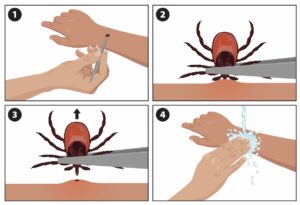
Remove the tick immediately. This is how:
- Use clean tweezers to grasp the tick as close to the skin’s surface as possible.
- Pull upward with steady, even pressure. Don’t twist or jerk the tick; this can cause the mouth-parts to break off and remain in the skin. If it does break off and you cannot remove the mouth easily with tweezers, leave it alone and let the skin heal.
- Thoroughly clean the bite area and your hands with rubbing alcohol or soap and water.
NOTE: Never crush a tick with your fingers. Dispose of a live tick by placing it in a sealed bag/container.
Where are people getting diagnosed with alpha-gal syndrome?
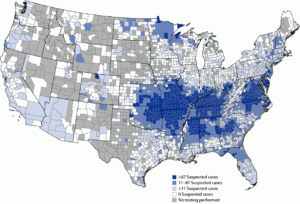
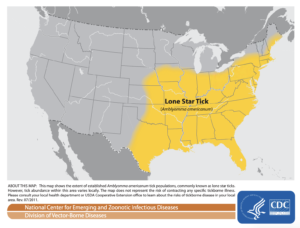
In the U.S., Lone Star tick bites cause AGS. Lone star ticks are most common in the southern, midwestern, and mid-Atlantic United States. They are also found on Martha's Vineyard, Cape Cod, and Nantucket. Internationally, other ticks cause AGS.
While Martha's Vineyard is experiencing explosive growth of lone star ticks, and therefore alpha-gal syndrome, it is far from the only hotspot in the United States.
CDC Map published in 2023, showing test results for Alpha-gal IgE by County from 2017-2022
CDC Map of the Lone Star tick territory in the United States
What we do not know (yet) about alpha-gal syndrome
There are many questions yet to be answered by science and research, across fields of medicine, biology, tick ecology, and public health.
Here are a few of the major open questions:
- Some people who get lone star tick bites are fine. Some develop alpha-gal syndrome. What factors increase an individual's likelihood of becoming allergic? What protects people from becoming allergic?
- Some people see their allergic symptoms go away over months or years. Others never find relief, even after avoiding more tick bites. Why?
- What are the long-term effects of this allergy?
- How many people are living in the United States with this allergy? With data up through 2022, the CDC estimated that up to 450,000 Americans could be living with AGS, but since then there has been broader education of healthcare providers and major media coverage. More awareness leads to more people finding the right diagnosis for their symptoms.
Humans get alpha-gal syndrome but dogs (and other mammals) don't
A common question we get is, "Can my dog get alpha-gal syndrome?" The answer is no! Your dog already has alpha-gal sugars in its body and therefore its immune system does not create an allergic response.
All mammals except humans, chimpanzees, gorillas, and orangutans have alpha-gal sugars in their bodies already.
When a Lone star tick bites, the saliva has alpha-gal sugars in it. Sometimes our body recognizes it as nothing more than a tick bite. For others, their immune system looks at the sugar and decides, "Foreign invader!" and creates a system to spot the molecule the next time you see it and produce an allergic response. The transition from bite to allergy usually happens in a matter of weeks to months.
People with Alpha-gal syndrome are most often exposed to mammals through their diet when they eat them.
Diagnosing Alpha-Gal Syndrome
"The Midnight Allergy": alpha-gal syndrome is often delayed and variable
In diagnosing allergies, everything hinges on symptoms rather than testing. So what are we looking for?
The first clue is that alpha-gal reactions are usually delayed, and often occur 2-8 hours after people eat foods containing alpha-gal. Alpha-gal is sometimes called the “Midnight Allergy” because many people eat their biggest portion of mammal products (like a steak, hamburger, pork chop, bowl of ice cream) at dinner and then wake up in the night with new unexplained symptoms.
While most alpha-gal syndrome symptoms are delayed, some can manifest faster depending on how alpha-gal gets into the body. Specifically, if alpha-gal is inhaled (fumes of cooking mammal meat like at a barbeque) or injected (like in a medication), reactions can be immediate.
Like all allergies, symptoms can range from mild to severe.
Note that people with AGS often do not react after every exposure. Sometimes called "consistently inconsistent", people living with AGS can be fine eating a food one time and then react the next time.
Symptoms can also change for the worse if there are more tick bites.
Symptoms of alpha-gal syndrome
Alpha-gal syndrome symptoms can include:
- Hives or itchy rash
- Nausea or vomiting
- Severe stomach pain
- Heartburn or indigestion
- Diarrhea
- Cough, shortness of breath, or difficulty breathing
- Drop in blood pressure
- Swelling of the lips, throat, tongue, or eye lids
- Dizziness or faintness
- A combination of symptoms referred to as anaphylaxis
It is critical to learn how to recognize and respond to the full range of allergic symptoms, especially anaphylaxis.
Take the FARE Recognizing and Responding to Anaphylaxis training and be prepared.
Navigating a new allergy is difficult. Alpha-gal syndrome is especially difficult due to its variable symptoms. Scroll to the resources at the bottom of the page for information on Support Groups and resources that can help you navigate next steps.
Pro tip: Keep a food and symptom journal
Because alpha-gal symptoms are delayed, it can be difficult for patients and providers to figure it out. If you are experiencing new symptoms, or symptoms that you find no relief for, track the time and date of the food you eat and the symptoms you experience. Share this with your healthcare provider.
Remember, in diagnosing allergies the symptoms are the most important first step.
How a provider will diagnose alpha-gal syndrome
A healthcare provider diagnoses AGS by doing:
- A detailed patient history
- A physical examination
- A blood test
Providers should consider the tests along with
- Symptoms
- Whether allergic reactions are delayed
- History of tick bites or outdoor exposure
Allergy skin testing may also be used to help diagnose AGS.
--------------------
There is a FREE CDC training on alpha-gal syndrome.
>>> Take the CDC AGS Training! <<<
This training is free, on-demand, and available to anyone. It is designed with healthcare providers in mind, and reviews the epidemiology, clinical characteristics, testing, management, and tick bite prevention for alpha-gal syndrome.
--------------------
Alpha-gal syndrome: testing and diagnosis pearls
2 minutes, 32 seconds
Alpha-gal syndrome: the tick bite-induced epidemic of severe allergic reactions
An interview between the Martha's Vineyard Tick Program and AGS Expert Dr. Scott Commins
58 minutes
How a provider will test for alpha-gal syndrome
The typical test performed for alpha-gal syndrome is a blood test, which looks for specific IgE antibodies the immune system produces in response to alpha-gal.
Importantly, alpha-gal testing should be pursued only after symptoms develop in consultation with a healthcare provider. The test is an important confirmatory tool but is not recommended as a screening test for individuals without symptoms.
Why do experts discourage universal screening (testing without symptoms)?
Positive alpha-gal specific IgE test results may occur in people who do not have symptoms (AGS), particularly in regions with lone star ticks. A positive blood test in the absence of symptoms is called sensitization, and is not Alpha-gal Syndrome. Individuals who test positive but do not experience reactions after eating mammalian products do not need to proactively remove them from their diet.
This means alpha-gal syndrome diagnosis starts with symptoms first, testing second.
Listen to an alpha-gal syndrome expert for yourself!
Dr. Scott Commins, is one of the leading physician scientists in the United States researching AGS. He created this short and sweet "Pearls" series with AlphaGalInformation.org to help people learn more about AGS.
Managing Alpha-Gal Syndrome
Double Delay, Double Avoidance
Newly diagnosed? Start here: AlphaGalInformation.org's Checklist for the Newly Diagnosed
Alpha-gal syndrome is characterized by a double delay, and managing it requires double avoidance.
The Double Delay:
- Weeks to months between a lone star tick bite and the first allergic symtpoms
- Hours between eating a mammalian product and having an allergic reaction
The Double Avoidance:
- Avoid mammalian products you react to
- Avoid more tick bites
New tick bites can make your AGS worse. If you avoid new tick bites, you may eventually be able to add mammalian foods back into your diet under the supervision of your allergist.
Managing your reactions
Your provider will work with you to develop a plan for managing both severe reactions and milder symptoms, such as a few hives or mild GI symptoms. Your plan may include the use of antihistamines, epinephrine autoinjectors, and possibly steroids, oral cromolyn, or omalizumab (Xolair).
Remember, if you are prescribed emergency medications you should carry them with you when you go out!
Learn to recgonize the symptoms of an allergic reaction, especially the symptoms of anaphylaxis which requires quick action. Take the FARE Anaphylaxis training today.
Figure out your trigger foods with your healthcare provider
All foods made from mammals or with mammal-derived ingredients may contain alpha-gal. However, you may not need to avoid all of these foods. Work with your healthcare provider to determine what foods to avoid based on your sensitivity and preferences.
Most patients with AGS need to avoid:
- Mammal meat, like beef, pork (including bacon), lamb, venison, bison, goat, and rabbit
- Mammal organs, like liver, kidneys, intestines (tripe), and Rocky Mountain oysters
- Mammal fat, like lard and tallow
- Foods made from the tissue or fluids of mammals
- Mammal broth, bouillon, stock and gravy
- Flounder roe (nitsuke)
Foods you may need to avoid (talk to your healthcare provider):
- Dairy, like milk, yogurt, cheese, butter
- Gelatin
- Mammal byproducts
- Carrageenan (made from red algae that produce alpha-gal)
- Some natural flavorings
Keep a food and symptom journal to figure out your trigger foods. Because alpha-gal symptoms are delayed, it can be difficult to figure out the culprit. Track the time and date of your food and symptoms. Share this with your healthcare provider.
You may also wish to consult a dietician.
How do I know if foods contain alpha-gal?
While some foods are obvious for being mammal products like steaks or pork chops, many are not so obvious.
Some of the best tools available are apps and websites:
- AlphaGalInformation.org's Food Guide for tips and tricks to figuring out your allergy.
- For grocery shopping, use the FIG App. This has a barcode scanner and tells you whether the food has, may have, or does not have your allergen in it.
- For alcohol, use Barnivore.com. Some alcohol uses mammal products in the production to remove impurities.
- For medication or personal care products like sunscreens, use PillClarity.org.
Note that there is no required labeling yet for foods or medications containing alpha-gal. There are efforts to change that, so that alpha-gal is labeled like peanuts, milk, or other allergens.
Foods you CAN eat with alpha-gal syndrome
While navigating a new allergy is never easy, there are foods you can eat.
- Fish and other seafood, except flounder roe (eggs)
- Poultry, like turkey, chicken, and duck
- Eggs
- Emu and ostrich (birds whose meat tastes like beef)
- Pork from Revivicor’s genetically modifed GalSafe pigs
- Fruits, vegetables, and grains
- Nuts, seeds, beans, lentils, tofu, tempeh
Going out to eat takes clear communication. Across the U.S., many people still do not know about Alpha-gal syndrome. It is strongly recommended that you make and carry a card with you that lists out your allergies. That way you can provide the card to a waiter, who then can take it to a cook or chef, to make sure your food choices are safe.
Medicines and alpha-gal
Before reading on, remember that medicine is always a balance of risk and benefits. Talk to your healthcare provider about any questions related to your medications and allergy concerns.
—–
Many drugs, vaccines, and other medical products contain mammal-derived ingredients. Some medications should be avoided or used with caution. Other products like gelatin capsules, gelcaps, and tablets containing magnesium stearate or lactose are often tolerated.
Sometimes the danger of not using a medical product outweighs the risk of a reaction (e.g., antivenom, rabies vaccine). Seek your healthcare provider’s advice about the use of specific medical products, especially if you take thyroid medication, pancreatic enzymes, infliximab (Remicaid), ustekinumab (Stelara), or if you need a vaccine, antivenom, heparin, or medical procedure.

Pill Clarity is a FREE resource that can help you figure out if your medications contain alpha-gal and help you find medications that are free from animal-derived ingredients.
Things that can make your reactions worse (also called "cofactors")
Cofactors such as alcohol and exercise can make reactions more likely or more severe. For example, if you drink wine with dinner or jog after lunch, you are more likely to react to any alpha-gal you consumed. Other cofactors include NSAIDs like Advil, Aleve, Motrin, Naprosyn, diclofenac, and ibuprofen.
Other sources of alpha-gal exposures
Cosmetics, personal care products, and household products can also contain alpha-gal. If you react to them, try vegan products. Check for carrageenan, especially in toothpaste.
Dander, waste, saliva, blood, and amniotic fluid from pets, livestock, and game contain alpha-gal. Most people can keep their pets. Farmers may need to take special precautions, especially during calving. Hunters need to avoid direct exposure to blood.
Some people react to airborne alpha-gal, especially fumes from cooking meat.
Visit AlphaGalInformation.org's Food Guide for more information and helpful tips.
More Resources
Websites
- AlphaGalInformation.org
- AGS Alliance
- AGS Foundation
- Two Alpha Gals
- AGS Physician's Reference Manual (PDF)
- CDC - Products that may contain alpha-gal
- Checklist for the Newly Diagnosed
- Recognizing & Responding to Anaphylaxis Training
- AlphaGalInformation.org’s Media Library:
https://alphagalinformation.org/media-library/
Alpha-Gal Support Groups
In-person support groups:
The Island Boards of Health Support Group meets the 3rd Thursdays of the month, 5-6pm, at the Up-Island Council on Aging, in West Tisbury. See our events calendar for more details.
Online support groups:
- [Facebook] Alpha-Gal Information: Evidence-Based Support
- [Facebook] Alpha-Gal MV (MV-Specific)
Podcasts
AGS Podcasts to listen to:
MVY Radio’s Interviews with Aubrey Stimola Ryan (Soundcloud requires you to create a free account to listen)
- Part 1: https://soundcloud.com/mvyradio/aubrey-stimola-ryan-alpha-gal-syndrome
- Part 2: https://soundcloud.com/mvyradio/the-alpha-gal-aubrey-stimola-ryan-encore-episode
FAACT Podcasts:
- Exploring Alpha-Gal Syndrome with the same Two Alpha Gals Candice Matthis and Debbie Nichols!
- Could It Be Alpha-Gal Syndrome? with Dr. Scott Commins
Tick-Borne Illness Resources
Identify Tick Species
Types of Ticks on the Islands
Lone Star Tick
Common on the Islands
Alpha-Gal Syndrome
Learn About AGS
Public Presentations
Browse Tick Presentations
Video Resources
Informative Tick Videos
Yard Surveys
Residential Yard Surveys