
Protection and Education
Tick-Borne Illness
We would not be in public health if we did not lead with prevention.
We like to say, “Nothing good ever came from a tick bite.”
At best, tick bites are itchy. At worst, they can lead to tick-borne infections and allergies. Even though most tick bites do not cause illness, we still want to help you reduce your risk. Visit our Prevent the Bite page to learn practical tips and tricks to stay safe.
Follow the Martha’s Vineyard Tick Program for more content on prevention, ecology, biology, and epidemiology. We’re scien-teriffic!
Found a tick? Don’t panic!
Use the Tick Bite Bot to figure out what to do next. Click “Get Started.”
The risk of getting sick from a tick bite depends on several factors:
1. The types of ticks in the environment
2. The health problems that they cause
3. The time of year and the number of ticks out there
4. The types of activities you are doing outside
5. What you are doing to protect yourself outdoors
6. How long the tick is attached
We will walk you through these pieces step-by-step. You can also click on items in the list to jump to that section.
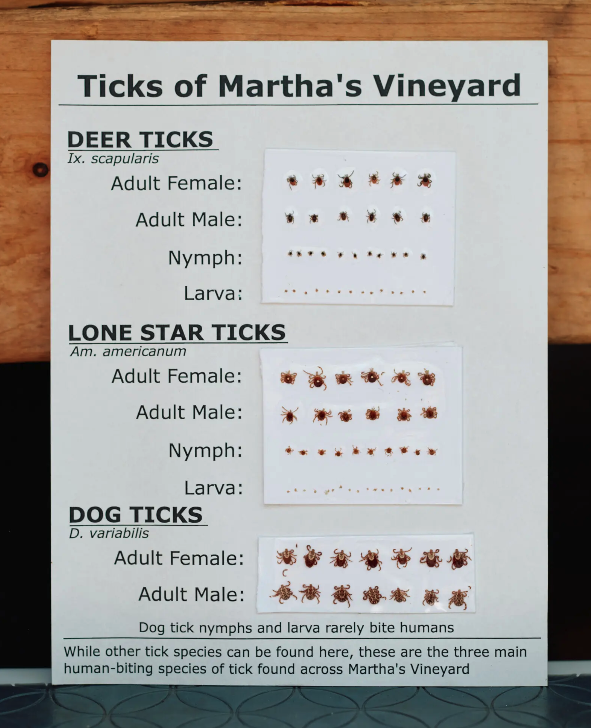
The Ticks of the Cape & Islands
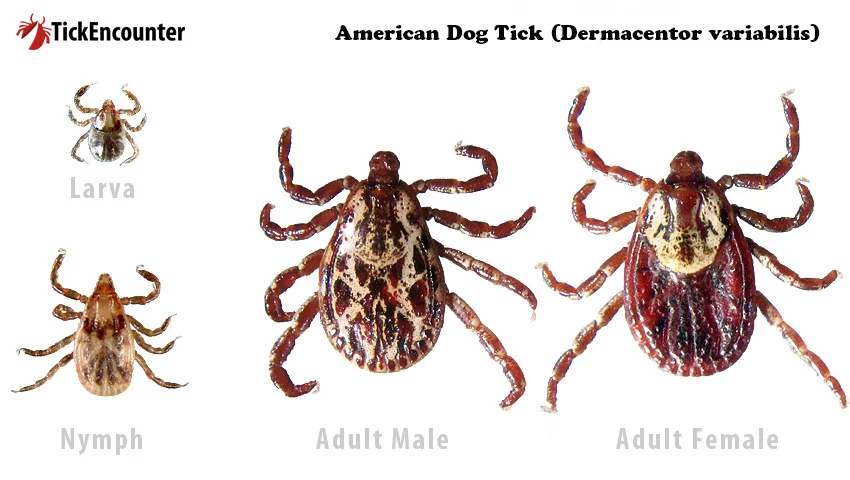
American Dog Tick
The original Cape & Islands local
Large and clunky, the American Dog tick can be spotted on the ends of grasses on dunes and in meadows.
Only the adult stage is known to bite humans and are active from spring to fall.
American Dog Ticks can transmit tularemia and Rocky Mountain Fever.
Note that you do not find American Dog Ticks on Nantucket.
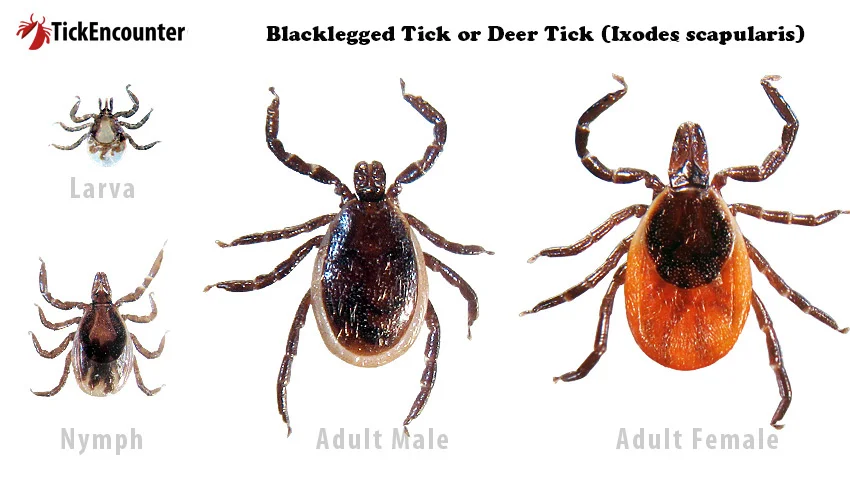
Deer Tick
The problem tick
Deer ticks (also called blacklegged ticks) are small and can be found year-round on the Cape & Islands, as long as it’s above 40 degrees Fahrenheit.
Adults are active in the fall through the winter and spring. Then the smaller nymphs come out in spring and stay active through summer.
Deer ticks are the biggest drivers of infectious disease including Lyme disease, babesiosis, anaplasmosis, hard tick relapsing fever (borrelia miyamotoi), and Powassan virus.
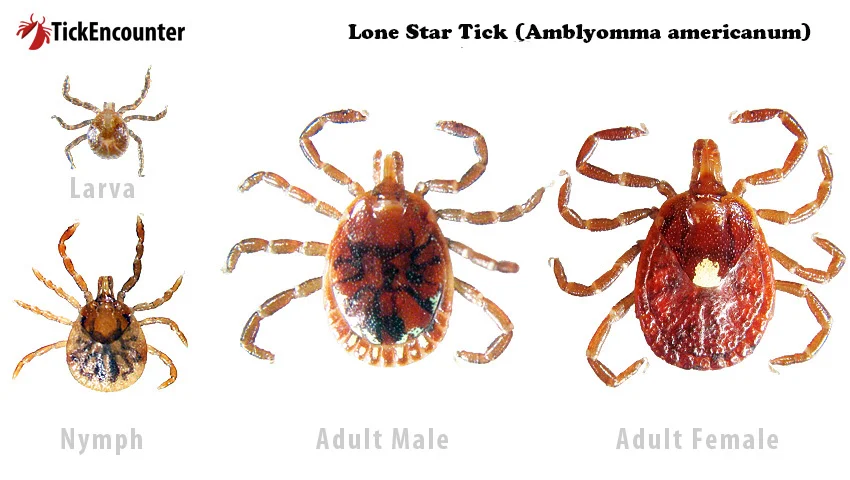
Lone Star Tick
The new bully on the block
Lone Star ticks are named after the white dot found on adult female ticks. The male adult, nymph and larvae stages do not have the white dot.
Lone star ticks were commonly found in the Southeast US and are now making their way up the Atlantic coastline, then working their way inland.
In our region, Lone Star ticks first proliferated on Martha’s Vineyard but are becoming increasingly common on Cape Cod and Nantucket.
These ticks are active from spring to fall. The larvae (babies) are out in later summer and fall and can cluster together and cause numerous bites at once.
Lone star ticks are known for causing Alpha Gal Syndrome (the red meat allergy), ehrlichiosis, tularemia, and STARI, Bourbon Virus, and Heartland Virus.
Health Risks: The disease is specific to the tick
All tick-borne disease is local. Meaning the risk of a tick-borne disease entirely depends on where you have been, what types of ticks you can find there, and what diseases they carry.
Below we show the most common to least common tick-borne diseases on Martha’s Vineyard (Duke’s County). The disease profile looks different on Nantucket, on Cape Cod, and in other parts of Massachusetts. If you are traveling outside of the Cape & Islands, you can look up the risk in the area you are traveling to on University of Rhode Island’s Tick Encounter Field Guide page.
Importantly, we want you to notice that almost always the disease is only transmitted by one type of tick. So the first step in assessing the risk of any bite is to try and figure out what tick bit you. This is hard to do for the average person, but the amazing scientists of University of Rhode Island have a solution: send in a photo of your tick to TickSpotters and they will identify it for you for free!
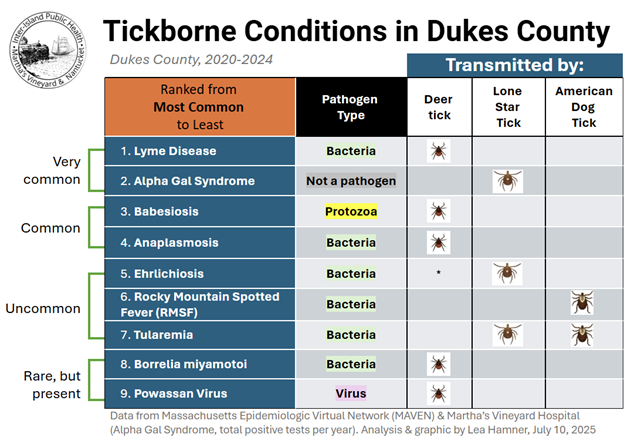
*Ehrlichiosis can be caused by a couple different strains of ehrlichia bacteria. In the Cape & Islands, we see ehrlichia chafeensis which is transmitted by Lone Star tick. In the Mid-West (Wisconsin, Minnesota), they have a deer tick-transmitted strain called ehrlichia muris eauclairensis.
The Number of Ticks Changes with the Seasons
There is a clear seasonality to tick lifecycles. Our Tick Activity graphic is based on real field samples on Martha’s Vineyard. If you take a look at the top of the graphic, there are the months of the year. Are there any months where there are no ticks active? No! Are there times of the year where there are more ticks active? YES!
Spring, summer, and fall we can find more types of ticks and more life stages (larva, nymph, or adult) out and about. Unfortunately, this coincides with the same time of year we–as humans–want to be outdoors too. So it is imperative that we take steps to protect ourselves, especially in high-risk seasons. Think of it as sunscreen. If you’re putting on sunscreen, you should be thinking about your tick protection too.

Tick News
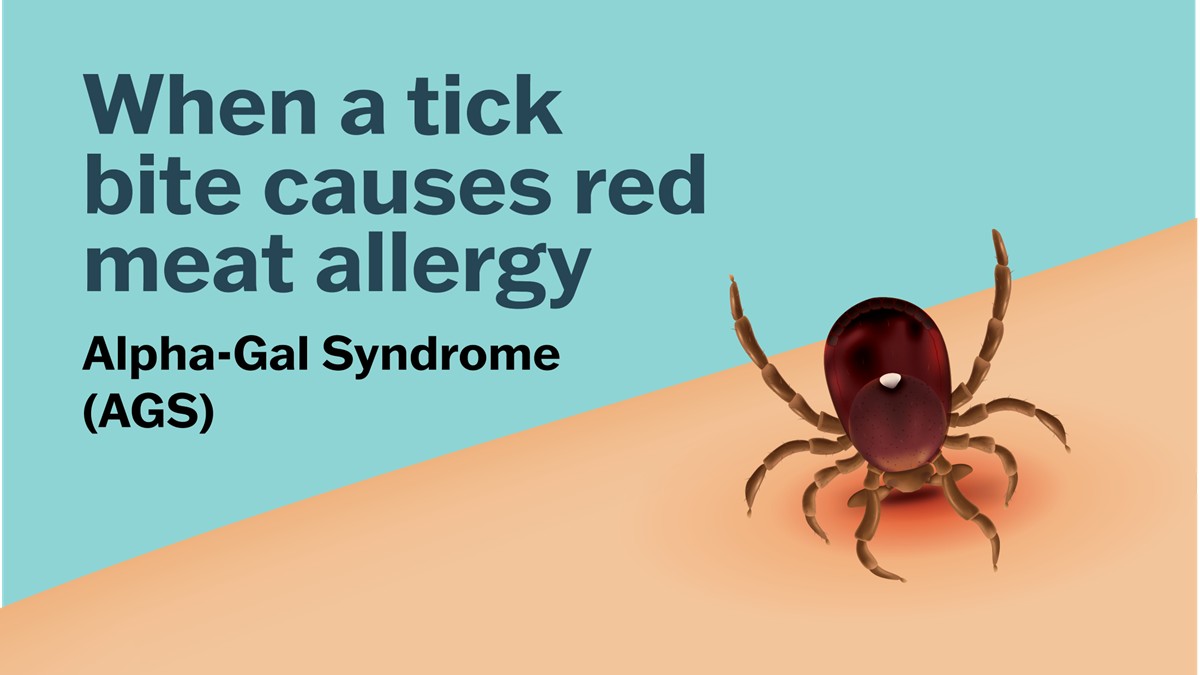
Massachusetts Department of Public Health Designates Alpha-Gal Syndrome a Reportable Condition
For Immediate Release March 20, 2026 Inter-Island Public Health Excellence Collaborative (IIPHEC) Aquinnah | Chilmark | Edgartown | Gosnold | Nantucket | Oak Bluffs | Tisbury |…
The Tall Tick Tales
Debunking Common Tick Myths Ticks have become a fact of life on Martha’s Vineyard, but unfortunately, so has the misinformation about them. From unproven extermination remedies…
Tick-Borne Illness Resources
Identify Tick Species
Types of Ticks on the Islands
Lone Star Tick
Common on the Islands
Alpha-Gal Syndrome
Learn About AGS
Public Presentations
Browse Tick Presentations
Video Resources
Informative Tick Videos
Yard Surveys
Residential Yard Surveys