
For Immediate Release
March 20, 2026
Inter-Island Public Health Excellence Collaborative (IIPHEC)
Aquinnah | Chilmark | Edgartown | Gosnold | Nantucket | Oak Bluffs | Tisbury | West Tisbury
New reporting strengthens case tracking and public health response to allergy caused by lone star tick bites
On March 19, 2026, the Massachusetts Department of Public Health announced that new clinical diagnoses of Alpha-gal Syndrome (AGS) and Alpha-gal IgE positive tests are now reportable to public health authorities. Massachusetts joins 17 states, plus New York City and Choctaw Nation, who have made the condition reportable.
“We applaud this important step toward improving the understanding of Alpha-gal Syndrome in our state,” said Drew Belsky, Tisbury health agent and chair of the Inter-Island Public Health Excellence Collaborative (IIPHEC). “Reportable disease data helps Boards of Health and our partners better understand the breadth of the problem at hand, so we can mobilize accordingly. As a community overwhelmed by this tick-driven allergy, this information is critical.”
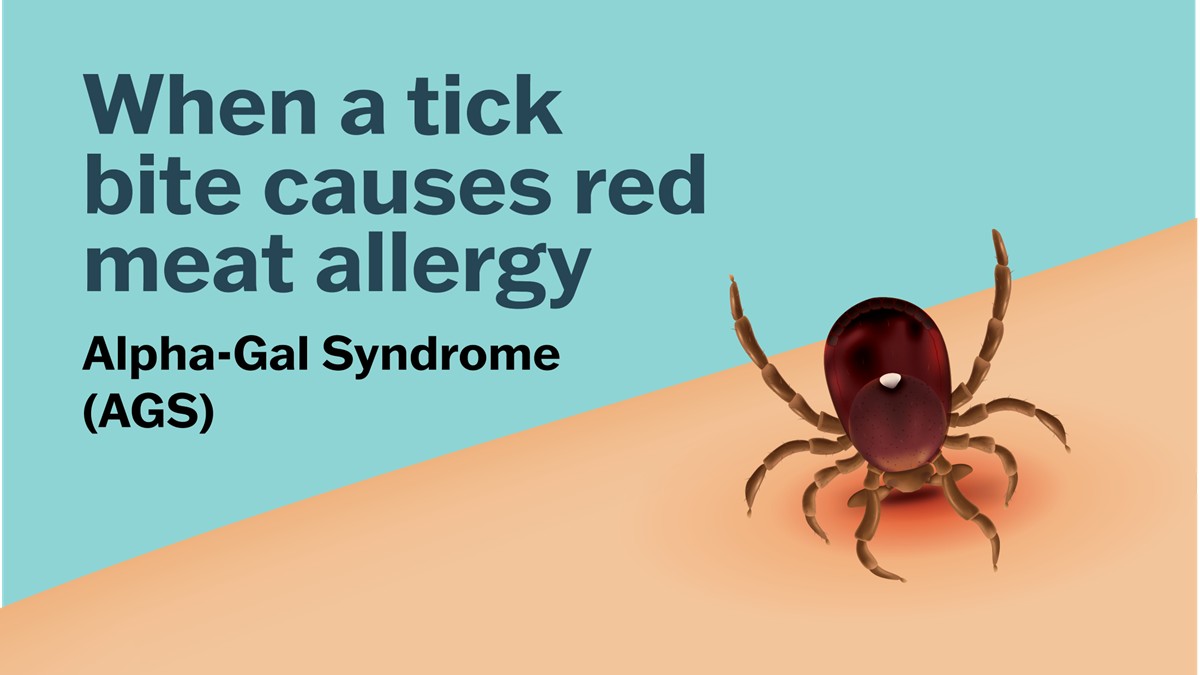
Alpha-gal Syndrome is an allergy that can develop following a bite from the lone star tick. Individuals with Alpha-gal Syndrome experience allergic reactions after consuming mammalian meat (such as beef, pork, lamb, venison, rabbit), and in some cases dairy products, medications, or other products containing mammalian-derived ingredients. The timing of Alpha-gal Syndrome reactions are different from typical food allergies. Reactions are usually delayed, presenting 2-6 hours after consuming mammalian meat or its derivatives, and can include gastrointestinal distress (nausea, vomiting, abdominal pain, diarrhea), hives or rash, swelling (of the hands, feet, lips, tongue, eyelids or throat), wheezing, shortness of breath, dizziness, or low blood pressure. Symptoms and symptom severity can change over time, especially if they get new tick bites. Severe symptoms could indicate anaphylaxis and should be seen by emergency care immediately.
Per the Massachusetts Department of Public Health clinical advisory issued March 19, 2026, “The diagnosis of AGS in patients should be based on a combination of laboratory test results and the presence of clinically compatible symptoms which manifest primarily after eating meat, dairy or other products containing alpha-gal.”
A Growing Concern on Martha’s Vineyard
Over the past several years, Martha’s Vineyard has experienced a dramatic rise in lone star tick (Amblyomma americanum) abundance, accompanied by a corresponding increase in Alpha-gal Syndrome awareness and diagnoses. Martha’s Vineyard Hospital has tracked Alpha-gal IgE testing trends and the number of positive results. In 2020, nine tests were performed overall, two of which were positive. In 2025, 1689 tests were performed, with 742 positive results. These data are not deduplicated. Patients could have been tested multiple times across years or within the same year.
“The Martha’s Vineyard Hospital laboratory data have been critical for tracking this rapid increase. But laboratory results alone cannot tell us who is truly allergic,” said Lea Hamner, epidemiologist for the Inter-Island Public Health Excellence Collaborative. “Reportability allows public health to distinguish between a signal and true disease burden. This data then drives prevention. When we measure the who, when and where of Alpha-gal Syndrome accurately, we can better protect our community.”
Diagnosing Alpha-Gal Syndrome: Symptoms First, Testing Second
Healthcare and public health officials emphasize that Alpha-gal testing should be pursued only after symptoms develop, in consultation with a healthcare provider. The test is an important confirmatory tool but is not recommended as a screening test for individuals without symptoms.
“While the data around Alpha-gal Syndrome is still evolving, published reports suggest that in groups with high tick exposure and broad testing, at most 10-20% of individuals who test positive for Alpha-gal IgE have the symptoms and therefore the Syndrome,” said Ms. Hamner. “That is why experts do not recommend universal screening.”
A positive blood test in the absence of symptoms is called sensitization, and is not Alpha-gal Syndrome. Individuals who test positive but do not experience reactions after eating mammalian products do not need to proactively remove them from their diet.
Why Reportability Matters
Making Alpha-Gal Syndrome reportable allows public health authorities to move beyond counting positive laboratory tests and toward tracking confirmed cases. Under new reporting requirements, public health agencies will be able to review clinical symptoms to distinguish between sensitization and true allergy; follow confirmed cases over time; and determine trends by age, geography, and risk factors. Improved reporting will also strengthen understanding of the range and frequency of symptoms associated with Alpha-Gal Syndrome. Altogether, this information will inform healthcare guidance and public health interventions.
Continued Focus on Prevention
Preventing tick bites remains the most important strategy for reducing the risk of Alpha-Gal Syndrome. Residents and visitors are encouraged to wear permethrin-treated clothing and use
EPA-approved tick repellents to avoid bites. On Martha’s Vineyard, lone star ticks emerge as early as mid-March and are active through October.
Martha’s Vineyard has long experienced high tick exposure and a significant burden of tickborne disease. The designation of Alpha-Gal Syndrome as a reportable condition reflects growing recognition that this condition warrants careful monitoring and coordinated public health response. IIPHEC will continue to work closely with healthcare providers, local Boards of Health, and state partners to ensure accurate reporting, appropriate testing practices, and ongoing community education.
For additional information about Alpha-Gal Syndrome and tick prevention strategies, visit:
- Martha’s Vineyard Boards of Health Alpha-Gal Syndrome Support Group: meets 3rd Thursdays at the Up-Island Council on Aging, 5-6pm
- IIPHEC Alpha-Gal-specific website: https://islandspublichealth.com/tick-borne-illness/alpha-gal-syndrome/
- IIPHEC Tick-Borne Illness website: https://islandspublichealth.com/tick-borne-illness/.
- Massachusetts Department of Public Health: https://www.mass.gov/info-details/alpha-gal-syndrome-ags
- https://AlphaGalInformation.org
- https://AlphaGalDocs.org
For press inquiries, please contact Lea Hamner at lhamner@oakbluffsma.gov.



0 Comments